You Must Live: New Poetry from Palestine edited and translated by Tayseer Abu Odeh & Sherah Bloor
When the Palestinian-American poet Lena Khalaf Tuffaha received the 2024 National Book Award for poetry, in her acceptance speech she said, “I don’t want to write anything that is a consolation. I don’t want to console.” I have read a not inconsiderable amount poetry, because historically I have written poetry and as everyone knows, it is almost entirely writers of poetry who read the stuff – this is only the slightest exaggeration – so I feel sufficiently informed to say that there is too much consolation in poetry by far, too many lullabies for the long ago sedated. It is a shame, because poetry is a medium of communication as versatile as any other, with nothing innately anodyne about it. There are many non-consoling things poetry that poetry can do exceptionally well: it can be the siren screaming through the night, a red flare; it can be testimony and indictment and howl and spell; it can rage against cruelty, tyranny, indifference—those crimes against life and love that poetry documents with its own incomparable, lacerating clarity. Poetry can sit heavy in your gut, can thunder through your skull, your heart, until you’re too sick and shaken to stay lying down. Poetry has all of these powers, and it is put to all of these uses in You Must Live: New Poetry from Palestine, an anthology of recent work by poets living and writing in Gaza and the West Bank. Editors and translators Tayseer Abu Odeh and Sherah Bloor write in the introduction of the joy they felt simply to receive the poems, as cherished proof that the poets remained alive. But these are not joyful poems. They are poems of hunger and dislocation and world-devouring loss, poems addressed to scavenger dogs, poems like footfalls sinking into ashes. One poet describes the people of his city under siege as “drowned in stones”; another writes, “the war / arrived as a curse, ate at our bodies. / It left nothing for the hungry / but heartbreak. The dream that rots from waiting.” To be confronted with these poems, unconsoled, is painful. It hurts, of course; it has to. And that is poetry, doing its work.
Other Favorites from the Patten Free Library Poetry Collection: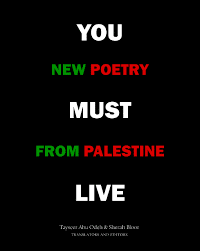
Breathturn by Paul Celan
The Collected Poems of Lucille Clifton 1965-2010
The Essential Muriel Rukeyser
Satan Says by Sharon Olds
The Lost Lunar Baedeker by Mina Loy
Collected Poems of Federico Garcia Lorca
The Animal is Chemical, by Hadara Bar-Nadav
Primordial by Mai Der Vang